Introduction to Chinese Cultivation and Xianxia Fiction
Chinese cultivation fiction, often known as xianxia (仙侠), is a vibrant literary genre blending mythology, Daoist philosophy, and fantasy into sweeping narratives of personal growth and transcendence. Rooted in ancient Chinese culture and Taoist traditions, xianxia explores the journey of mortals striving for immortality through spiritual cultivation. Central to this genre are concepts such as immortal cultivation and spiritual realms—realms beyond the physical world, where cultivators refine their souls and powers. This article delves into these ideas, tracing their historical background and cultural significance, while unpacking the fascinating worldview that underpins xianxia storytelling.
Historical Foundations: Daoism and the Quest for Immortality
The mythos of immortal cultivation in xianxia fiction draws heavily from Daoism, one of China’s indigenous spiritual traditions emphasizing harmony with the Dao (道)—the fundamental principle underlying the universe. Historically, Daoist alchemists and practitioners sought physical and spiritual immortality, employing meditation, breath control, herbal elixirs, and energy circulation (Qi cultivation). Early texts like the Zhuangzi and Dao De Jing introduced ideas of transcending human limitations and attuning to cosmic forces, inspiring practices aimed at achieving eternal life.
Chinese folklore also contributed through tales of immortal sages, magical herbs, and celestial beings. These narratives coalesced over centuries into the literary and cultural framework that gave rise to cultivation fiction, blending history, philosophy, mythology, and fantasy into a unified whole. Today’s xianxia novels inherit this legacy, dramatizing the aspirational process of becoming immortal through spiritual enlightenment and power refinement.
Immortal Cultivation: Levels and Internal Alchemy
At the heart of Chinese cultivation fiction is the concept of immortal cultivation—where practitioners refine their mind, body, and spirit to transcend mortality. This process is depicted as a gradual ascension through multiple cultivation stages or realms, each representing deeper comprehension and control over Qi (vital energy), spiritual power, and cosmic laws.
Typically, cultivation encompasses internal alchemy (neidan 内丹), a sophisticated system involving energy circulation through the body’s meridians, refinement of spiritual cores, and transformation of elemental energies. Cultivators harness meditative practices and esoteric techniques to break bottlenecks, overcome physical limitations, and achieve breakthroughs into higher realms of existence.
The journey is fraught with danger, as many xianxia stories emphasize that failure or premature attempts to ascend can result in spiritual degradation or death. This narrative tension reflects Daoist philosophical themes about balance, discipline, and the unpredictability of natural forces.
Spiritual Realms: Worlds Beyond the Mortal Plane
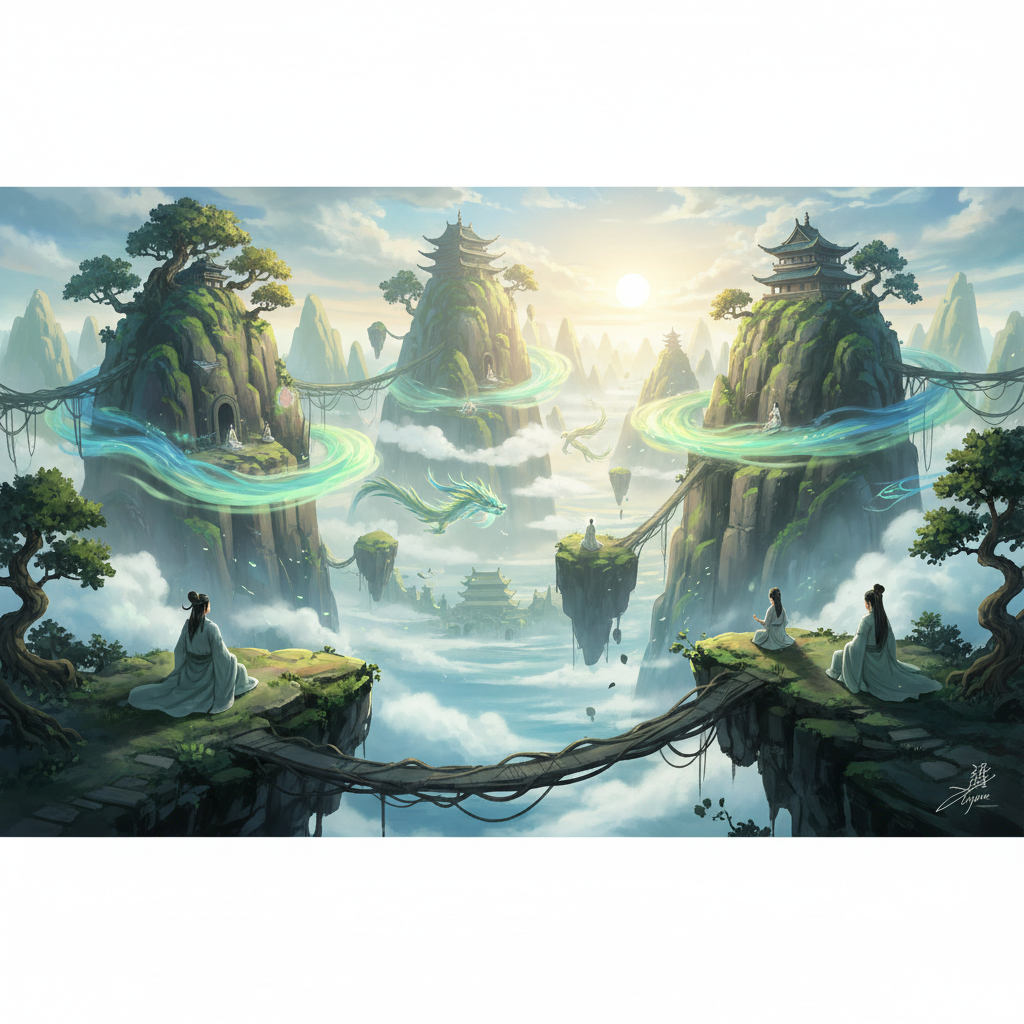
Spiritual realms refer to metaphysical planes of existence inhabited by spirits, immortals, demons, and cosmic forces. These realms function as both narrative settings and symbolic representations of a cultivator’s internal progress. In xianxia fiction, spiritual realms range from heavenly palaces and sacred mountains to primordial chaos and divine heavens, often layered into intricate cosmologies.
These realms are portals to transcendent experience, where cultivators may test their strength, encounter mystical beasts, form alliances, or confront cosmic laws. The traversal between realms often requires special techniques or artifacts, highlighting the boundary between the mortal world and higher spiritual dimensions.
From a cultural perspective, spiritual realms echo ancient Chinese cosmology, which envisioned the universe as hierarchical and interconnected. The interaction between realms, and the cultivation of beings who could traverse them, reinforces broader themes about harmony between humanity, nature, and the cosmos.
Cultural Significance and Modern Popularity
The enduring popularity of xianxia and cultivation fiction underscores a unique cultural dialogue with Chinese spirituality, philosophy, and identity. These stories provide contemporary readers with a means to explore traditional values such as perseverance, moral integrity, and harmony with nature through immersive fantasy.
Moreover, xianxia fiction often reflects contemporary societal issues allegorically—ambition, self-improvement, rivalries, and the pursuit of destiny—resonating with modern audiences domestically and internationally. The genre’s integration of martial arts, magic, and cosmic adventure appeals widely, contributing to China’s soft cultural influence through literature, television adaptations, and online platforms.
Conclusion: The Everlasting Appeal of Cultivation and Spiritual Realms
Chinese cultivation and xianxia fiction offer a window into a profound metaphysical worldview where mortal limits are challenged, and spiritual transcendence becomes attainable. Rooted in centuries-old Daoist and folk traditions, these stories portray a universe alive with mystical realms and eternal quests. The rich tapestry of immortal cultivation and spiritual realms continues to captivate readers, inviting them to journey beyond the mundane into landscapes where philosophy, myth, and fantasy converge. As the genre evolves, its cultural significance and imaginative power remain undiminished—a testament to the timeless human desire for growth, meaning, and immortality.