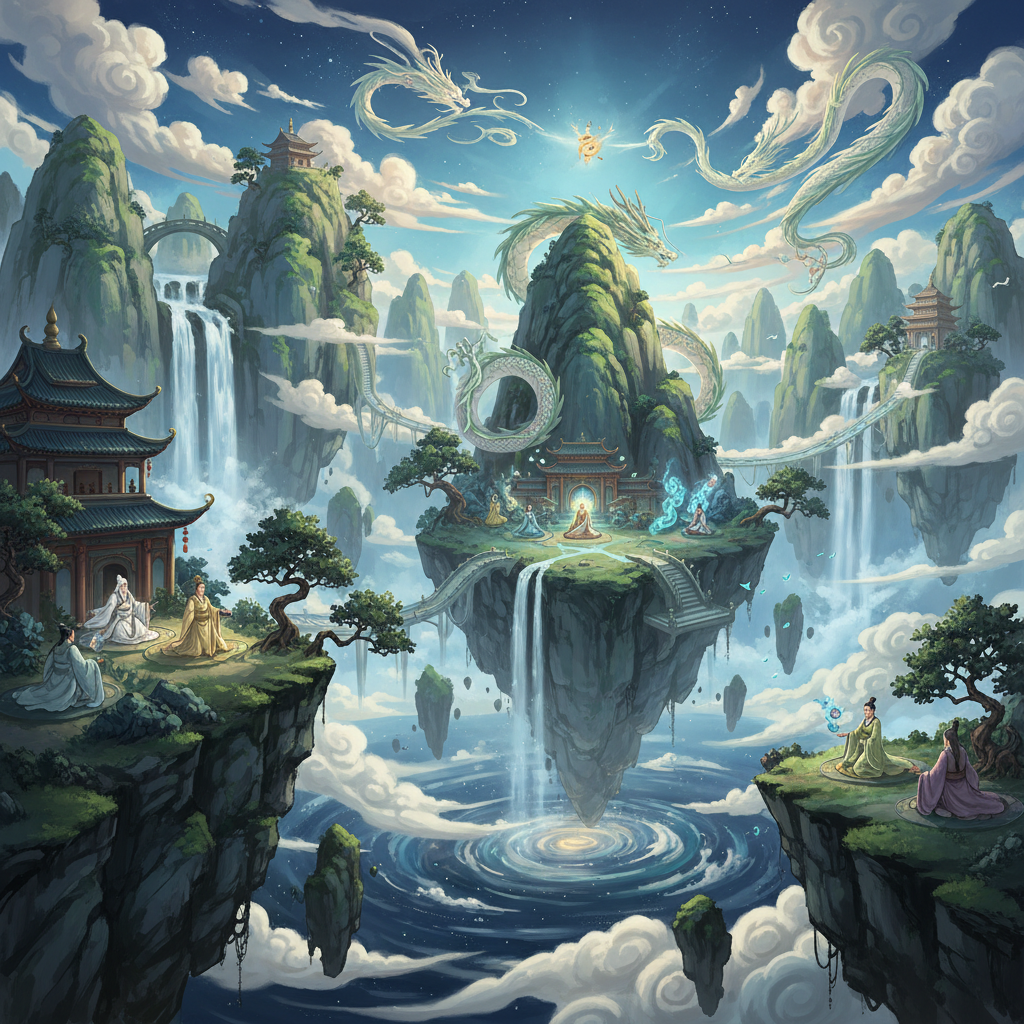
Unveiling the Roots of Chinese Cultivation Fiction
Chinese cultivation fiction, particularly in the xianxia genre, combines engaging storytelling with rich philosophical underpinnings and allegorical references to historical and cultural elements. Rooted in ancient Chinese beliefs about immortality and the cosmos, this genre invites readers into a world where characters undertake the arduous journey of cultivating their "qi" (vital energy) to achieve spiritual immortality.
Historically, the concept of cultivation dates back to Daoism, which emphasizes harmony with the universe and the pursuit of immortality. Texts such as the "Dao De Jing" and "Zhuangzi" explore themes of balance, virtue, and the interconnectedness of all life, ideas that remain prevalent in modern cultivation narratives. In these stories, the character's alignment with nature mirrors philosophical ideals, creating a narrative deeply connected to ancient wisdom.
The Journey of Cultivation: Levels and Realms
Central to xianxia fiction is the structure of cultivation levels, often depicted as tiers that characters must ascend to achieve immortality. These stages—ranging from "Mortal" to "Ascendant" and beyond—reflect the philosophical view that enlightenment is a progression towards unity with the cosmos. Each level is not simply a physical ascent but involves significant internal transformation and moral development.
Characters often encounter numerous obstacles—physical conflicts, moral dilemmas, interpersonal relationships—that reflect philosophical teachings about compassion, integrity, and self-discipline. This mirrors real-life spiritual practices, where aspirants must confront their flaws to achieve a higher understanding. The layered realms within these narratives expand the exploration of existence, showing readers how every ascent influences the interrelation of mind, body, and spirit.
Cultural Significance and Historical Context
Xianxia fiction, while contemporary in its widespread popularity, draws from a rich tapestry of Chinese mythology, folklore, and ancestral beliefs. Rooted in ancient texts and folklore, these narratives resonate with cultural significance, positioning them as vessels for teaching morality and social values.
The historical context of these stories is crucial, as they often reflect the social and political energies of their time. For instance, in periods of turmoil, such narratives provided an escape into a world where inequities could be addressed, or virtues rewarded—a reaction to the societal challenges faced by readers. Similarly, with the rise of popular culture in modern China, xianxia became a medium for expressing individualism, aspiration for transcendental goals, and the quest for personal identity in a rapidly changing world.
Innovations and Variations in Cultivation Narratives
As with any rich literary tradition, cultivation fiction has evolved, giving rise to diverse sub-genres. Variants like "xuanhuan" and "wuxia" introduce unique elements—more pronounced magical systems, martial arts, and integration of supernatural creatures—while maintaining the core philosophies surrounding cultivation. Such innovations allow for richer storytelling and diverse character arcs, further embedding philosophical inquiries in entertaining narratives.
Moreover, modern adaptations in manga, animation, and gaming have brought these themes to a wider audience, reshaping how these philosophical ideas are packaged and presented. The storytelling format has transitioned, incorporating multimedia elements that enhance immersion in cultivation experiences; engagement with the philosophy becomes interactive, appealing to younger generations hungry for both adventure and wisdom.
The Philosophical Inquiry into Immortality and Existence
At its core, xianxia and cultivation fiction is an exploration of immortality and existence itself. It asks profound questions: What does it mean to be immortal? How does one balance personal desires with universal harmony? The characters' journeys typically culminate in realizations that transcend mere physical life, hinting at a deeper understanding of existence as a cyclical process—a dance of creation and dissolution.
The narratives reflect the philosophical inquiry of ancient scholars, who argued that true immortality arises from virtues such as humility, honor, and selflessness. The quests undertaken by cultivation heroes invite readers to contemplate their lives, their choices, and the nature of reality. This interconnectedness between reader, character, and philosophy forms the backbone of the enduring appeal of this genre.
Conclusion: Bridging Ancient Wisdom and Modern Fascination
The allure of Chinese cultivation fiction lies not just in fantastical adventures, but in its deep philosophical resonance with ancient wisdom. By weaving together rich narratives filled with moral complexities, the genre offers insights into the nature of existence and personal growth, making it a significant part of modern literary culture. As readers navigate through the realms of cultivation, they are not merely escaping reality; they are engaging in a profound exploration of life’s deeper meanings, bridging the timeless wisdom of the past with contemporary searches for purpose and understanding.